
SUMMARY
Boba machines are the hidden engine behind many of today’s bubble tea and dessert drinks. Instead of hand rolling pearls or making popping boba one batch at a time, commercial boba machines automate key steps such as mixing, forming, curing, and rinsing. This makes it easier to produce toppings with the same size, texture, and flavor, day after day.
In this blog, we explain how Sinofude’s boba machines work, with a focus on popping boba and crystal boba production lines. We walk through the main parts of the line, how ingredients move through each stage, and what this means for consistency, hygiene, and output. By the end, tea shop owners and commercial kitchen operators will have a clear, step-by-step understanding of how a boba machine supports reliable, scalable production.
What do we mean by a “boba machine”?
“Boba” can mean different things depending on the product and the region, so it helps to separate two main groups.
- The classic black, chewy pearls most people associate with bubble tea.
- Made from a dough that uses tapioca starch, water, sugar, and sometimes color or flavor.
- The dough is cut and rounded into balls, then cooked until chewy.
Popping boba and crystal boba
- Small, colorful beads used in drinks and desserts.
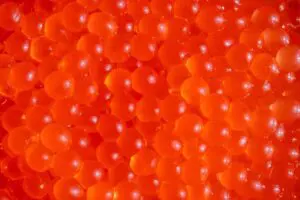
Popping boba has a thin outer shell and a liquid center that bursts when you bite it. - Crystal boba or konjac balls have a translucent soft, jelly-like texture instead of a pop.
Because these products are so different, the equipment is different too:
- Tapioca pearl machines work with a starch dough. They press, cut, and round the dough into pearls, then the pearls are cooked.
- Popping boba machines, like Sinofude’s CBZ series, work with liquids. They form droplets of flavored liquid and drop them into a calcium solution, where a thin shell forms around the center.
Our boba machines are built for popping boba, crystal boba, konjac balls, and imitation caviar. They are not intended for traditional tapioca pearls, which require separate equipment.
In this article we will:
- Briefly explain how tapioca pearl machines work, so the dough-based process makes sense.
- Focus on how Sinofude’s popping boba machines operate, since that is what their current boba range supports.
From dough to pearls: How tapioca boba machines work (short overview)
When people talk about “dough handling” for boba, they are usually referring to classic tapioca pearls. Here is a simple overview.
A typical tapioca pearl process includes three main steps:
- Dough preparation
- Tapioca starch, water, sugar, and any color or flavor are mixed into a smooth dough.
- The dough should be moist and elastic so it holds its shape without crumbling.
- Pressing, cutting, and rounding
- The dough is pressed into a sheet with even thickness.
- The sheet is cut into many small pieces.
- A rounding section uses rolling and friction to turn those pieces into round pearls.
- Cooking and cooling
- The fresh pearls are cooked in hot water until they reach the desired chewiness.
- They are then rinsed and soaked in syrup until they are ready to serve or pack.
This is how classic chewy tapioca pearls are made at scale.
Now we will move to the main focus of this blog: how Sinofude’s popping boba machines work.
Inside a popping boba machine: The main systems
Modern popping boba machines are built as compact production lines. They bring together several systems that work as one continuous process.
Typical sections include:
1. Ingredient preparation and cooking system
- Tanks and cookers hold fruit juice or flavored syrup, water, sugar, and sodium alginate.
- Other tanks hold the calcium solution used to form the outer shell.
- Heating and mixing help dissolve ingredients and keep the liquid smooth, so it can be deposited without clogging.
2. Depositing system
- A pump pushes the alginate mixture through a set of nozzles or distribution plates.
- These create even droplets that fall into the calcium bath.
Operators can adjust the size of the droplets, which controls the final boba size.
3. Calcium reaction bath
- Below the nozzles is a tank filled with calcium solution.
- When droplets fall into this tank, calcium reacts with the alginate at the surface.
- This reaction forms a thin, elastic gel skin around the liquid center, which is what gives popping boba its “burst” texture.
4. Curing, rinsing, and separation
- The beads move through the bath for a set time until the shell is strong enough to handle.
- A conveyor or lifting device gently removes the beads from the tank.
- Rinse systems wash away excess calcium solution so it does not affect flavor or mouthfeel.
5. Syrup soaking and temporary storage
- Clean popping boba is transferred into tanks filled with flavored syrup.
- The beads sit in syrup until they are packed into jars, cups, or other containers.
6. Control and automation
- The line is managed by a PLC (Programmable Logic Controller) a servo drive that controls temperature, pump speed, deposition timing, and other settings.
- Operators use a touchscreen to select recipes and adjust parameters.
- On some models, they can produce different products such as popping boba, crystal boba, konjac balls, or imitation caviar by changing a few parts.
All of these systems work together so that liquid ingredients go in and finished boba comes out, with consistent quality from batch to batch.
Step by step: How a popping boba machine works
Here is a simple, step-by-step view you can share with your team or partners.
Step 1: Prepare and load your liquids
- Mix fruit juice or flavored syrup, water, sugar, and sodium alginate in a tank until smooth.
- In a separate tank, prepare the calcium solution that will form the outer shell.
Step 2: Condition the boba solution
- The machine heats and stirs the flavored mixture as needed.
- The goal is a stable, lump-free liquid that flows easily through the nozzles or plates.
Step 3: Form droplets in the calcium bath
- The depositor pumps the mixture through multiple nozzles or holes above the calcium tank.
- Droplets fall into the calcium bath.
- The outside of each droplet begins to set, forming a gel skin, while the inside stays liquid.
Step 4: Let the beads cure
- The beads travel through the tank for a controlled amount of time.
This allows the shell to reach the right strength so the beads do not break during handling but still “pop” in the mouth.
Step 5: Lift and rinse
- A lifting device or conveyor removes the beads from the bath.
- Rinse water washes off extra calcium solution so it does not affect taste.
Step 6: Soak in syrup and pack
- The clean beads are transferred into flavored syrup tanks.
- From there, they move to filling equipment that packs them into jars, cups, or bags ready for storage and distribution.
For staff training, you could summarize it like this:
“We put flavored liquid into the machine, it drops into a special bath, turns into beads, gets rinsed, then sits in syrup until we pack or use it.”
Capacity options: From testing to full-scale production
Sinofude offers several CBZ series models designed for different production levels. The exact numbers vary by model and setup, but the typical range looks like this:
- CBZ20 lab boba and konjac ball machine
- Designed for experiments and very small batches.
- Around 20 kilograms per hour.
- CBZ50 and CBZ50D semi-automatic boba and konjac ball machines
- Designed for small bubble tea shops and smaller central kitchens.
- CBZ50 can reach about 50 kilograms per hour.
- CBZ50D adds another depositing head and can increase capacity up to about 80 to 100 kilograms per hour.
- CBZ50A automatic popping boba and crystal boba line
- A compact automatic line that can produce around 50 kilograms per hour.
Can make both popping boba and crystal boba by changing certain parts.
- A compact automatic line that can produce around 50 kilograms per hour.
- CBZ100 automatic popping boba production line
- Designed for larger batches with a capacity of about 100 kilograms per hour.
Can produce popping boba, crystal boba, and imitation caviar by changing some parts and nozzles.
- Designed for larger batches with a capacity of about 100 kilograms per hour.
- CBZ200 automatic popping boba production line
- Built for large-scale production with a capacity of about 200 kilograms per hour.
- Capable of making popping boba, crystal boba, and imitation caviar.
- CBZ500 and CBZ500S popping boba production lines
- Fully automatic stainless steel lines designed for high capacity production.
CBZ500 reaches about 500 to 600 kilograms per hour. - CBZ500S, with upgraded servo-driven depositors and cooking system, can reach around 1,000 to 1,200 kilograms per hour.
- Fully automatic stainless steel lines designed for high capacity production.
Across the range, the shared advantage is that boba size and product type can be adjusted by changing nozzles or depositing plates and a few key parts. This lets manufacturers respond to different menu needs or product lines without rebuilding the entire system.
What this means for tea shops and commercial kitchens
If you run a tea shop, central kitchen, or food brand, the main question is whether a boba machine will make your operations easier and more reliable.
Consistent quality
- Bead size is controlled by the nozzles or plates and machine settings.
- Shell thickness is managed by recipe and time in the calcium bath.
- Drinks and toppings look and feel more uniform across batches and locations.
Higher output with less manual labor
- Staff do not need to spend hours forming and cooking toppings by hand.
- The machine can run for longer periods with supervision rather than constant hands-on work.
- Your team can focus more on brewing, customer service, and new product development.
Better hygiene and process control
- Food contact parts are made from suitable materials such as stainless steel and are designed for cleaning.
- Closed or semi-closed systems help reduce contamination risks.
- PLC control and clear operating procedures support repeatable, documented processes that are easier to audit.
Flexibility in product range
Depending on the model, one line may produce:
- Popping boba
- Crystal boba
- Konjac balls
- Imitation caviar
This makes it easier to expand your menu or product line without buying separate machines for every topping type.
Choosing the right boba machine: Questions to ask
When you compare boba machines, it helps to look at more than just price.
Ask yourself about:
- Product mix
- Do you want popping boba only, or also crystal boba and konjac balls?
- Will you still use traditional tapioca pearls? If yes, remember that popping boba machines do not make tapioca pearls, so you will need separate equipment or a supplier for those.
- Capacity and growth plans
- How many kilograms of toppings do you use per day or week right now?
- Do you plan to supply only your own shops, or also wholesale or private label customers?
- Do you need a lab or pilot machine first, or are you ready for a full-scale line?
- Space and utilities
- Check the footprint and height of the machine against your production area.
- Confirm power, water, and any steam requirements for the models you are considering.
- Cleaning and maintenance
- Ask how long cleaning and product changeover take.
- Check how easy it is to access food contact areas, replace wear parts, and get technical support.
- Operator training
- Make sure your team can comfortably use the PLC touchscreen.
- Plan simple standard operating procedures so new staff can learn the process quickly.
A clear conversation around these topics will help you choose a machine that fits your menu, space, and long-term plans.
Turning boba demand into reliable production
Boba machines take what used to be a slow, hands-on process and turn it into a controlled, repeatable system. By automating key steps like mixing, forming, curing, and rinsing, Sinofude’s boba production lines help you produce popping boba, crystal boba, and other toppings with consistent size, texture, and flavor.
Whether you are running a single tea shop, a central kitchen, or a large-scale production facility, the right boba machine can make it easier to plan your output, support food safety, and grow with demand.
If you are exploring boba production or upgrading your current setup, our team is happy to help you compare models and design a line that fits your recipes, capacity goals, and production space.
Contact our team today to discuss your project and learn how Sinofude’s boba machines can support your next stage of growth.