
SUMMARY
Adding gummies to an existing candy operation does not have to mean rebuilding your facility or replacing your current line. In this blog, we explain how candy makers can expand with gummy production equipment using a modular approach, smart layout planning, and equipment choices that fit your current workflow, staffing, and food safety requirements.
How Candy Makers Can Easily Expand Into Gummy Products Without Starting Over
Why gummies are a smart expansion for established candy producers
If you already produce candy, you likely have the fundamentals in place: ingredient handling, batch production routines, quality checks, and packaging experience. Gummies let you diversify your product mix without entering a completely unfamiliar category, especially if you already run cooked candy processes.
The key is avoiding the “all-or-nothing” mindset. Most producers do not need a full greenfield gummy plant to get started. With the right gummy production equipment, you can add a gummy capability in phases while keeping your existing operation running.
Start with a workflow map, not a machine list
Before you choose equipment, map how products and employees move through your facility today.
Questions to ask:
- Where will raw materials be staged and weighed?
- Where will cooking and mixing happen?
- Where will depositing, setting, and finishing fit without disrupting current lines?
- Where do you have space for curing or drying time?
- How will you prevent mix-ups between products, especially allergens and flavors?
This step keeps you from buying equipment that fits your output goal but creates bottlenecks in your layout.
What “modular” expansion really means
A modular approach means you add the parts of a gummy line that you need now, with the ability to scale later. Instead of replacing everything, you build a gummy process around your current facility and expand as demand grows.
For many candy producers, this looks like:
- Adding a dedicated gummy cooking and mixing system while keeping existing packaging
- Starting with one depositing solution and adding additional depositing heads or lanes later
- Expanding curing or drying capacity once sales volume is proven
- Adding automation after you have stable formulas and repeatable production
The goal is to minimize disruption while still setting yourself up for long-term scale.
The core modules of gummy production equipment
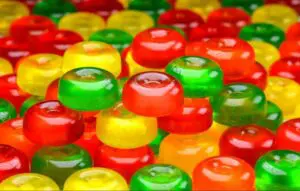
Every gummy operation needs a few core functions. The exact equipment depends on your formula, output goals, and forming method, but the production steps are consistent.
1. Cooking and mixing
This is where consistency starts. Heating and mixing need to be stable and repeatable so the gummy mass deposits evenly and sets correctly.
What to confirm:
- Can you hit and hold the right temperatures consistently?
- Can you mix thoroughly without damaging sensitive ingredients?
- Can you scale batch size without changing texture or piece weight?
If you produce supplement gummies, process control and documentation become even more important. In the United States, dietary supplement manufacturing is subject to Current Good Manufacturing Practice (cGMP) requirements under Title 21 of the Code of Federal Regulations (CFR) Part 111.
2. Depositing and forming
This is the step that shapes the gummy and controls piece weight. It is also where many producers see the biggest difference between “trial runs” and production-scale consistency.
What to confirm:
- What piece weight range can the depositor hold consistently?
- How easy is it to switch sizes, shapes, or colors?
- What is the expected cleaning time between runs?
3. Setting, curing, or drying
Gummies need time and the right environment to reach the final texture. This is often the module that drives space planning.
What to confirm:
- How much time does your product need to reach target texture?
- Do you have space to stage trays or finished products during curing?
- Can you control temperature and humidity well enough for repeat results?
4. Finishing and packaging
Many candy makers can leverage existing packaging assets, at least early on. That is often a major cost advantage when expanding into gummies.
What to confirm:
- Can your current packaging line handle gummy texture and stickiness?
- Do you need a finishing step first (sanding, oiling, or polishing)?
- Do labels and lot coding meet your internal traceability needs?
How to add gummies without overhauling your facility
Here are practical strategies we see work well for candy producers.
Use your existing packaging where possible
If your packaging line can handle the product, keep it. Start by adding the front end of gummy production and connect into your existing packaging flow. This reduces initial investment and keeps your team on familiar equipment.
Create a dedicated gummy zone
Gummies introduce different cleaning, moisture, and ingredient handling needs. Even without rebuilding, you can create separation through scheduling, defined traffic paths, and dedicated tools and storage. This supports sanitation and allergen control expectations.
Under Title 21 CFR Part 117, food facilities are expected to maintain sanitary operations, including cleaning and sanitizing equipment in a way that protects against contamination and allergen cross-contact.
Plan for cleaning and changeover from day one
Expansion fails when cleaning time gets underestimated. If gummies are a new product type for your facility, cleaning routines often change. Choose equipment designed for access to food-contact surfaces and define cleaning steps before you ramp production.
Build capacity in phases
A phased approach lowers risk:
- Validate the product and process on a right-sized line
- Stabilize quality targets and piece-weight control
- Add output capacity and automation after your workflow is proven
This is how you grow without starting over.
Regulatory and food safety considerations you should plan for early
Most candy producers already have strong food safety routines. Gummies can add new focus areas like moisture control, sticky residue management, and more frequent changeovers.
If you manufacture conventional food in the United States, Title 21 CFR Part 117 sets expectations for cGMP and preventive controls for human food.
If you manufacture dietary supplement gummies, Title 21 CFR Part 111 applies to dietary supplements.
You do not need to turn this into a legal project, but you should make sure your equipment choice supports sanitation, traceability, and consistent production control.
Learn how to integrate gummy production into your workflow with Sinofude
Expanding into gummies is easier when you treat it like a practical add-on to your existing operation, not a total reset. Start with a workflow map, choose the right modules of gummy production equipment, and scale in phases that match demand.
Want a clear plan before you invest? Talk with Sinofude about your current line and your gummy goals. We can help you identify the best way to integrate gummy production into your workflow, with a path to expand capacity over time.