
SUMMARY
Non-starch gummy manufacturing equipment is reshaping how health focused and supplement brands approach gummy production. Instead of relying on trays of reusable starch to form and dry pieces, non-starch lines use high solids cooking, precise depositing into reusable molds and controlled cooling. This shift changes more than just the hardware. It changes how you think about hygiene, validation, plant layout and the types of gummies you can confidently bring to market.
For health conscious brands, gummies are no longer just candy. They are a trusted delivery format for vitamins, supplements, and functional ingredients. They require processes that are easy to clean, transparent to auditors and compatible with vegan and plant-based positioning. Non-starch gummy manufacturing equipment supports those goals with cleaner product contact surfaces, shorter setting times and better control over sensitive active ingredients.
In this blog, we explain how traditional starch systems work, how non-starch processes differ and what to consider when you compare both approaches for your own portfolio.
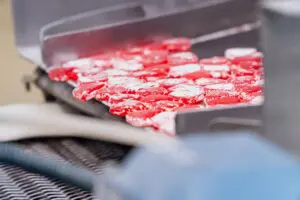
Non-starch gummy manufacturing is a modern production method that uses moldless depositing technology instead of traditional starch molding. This process deposits gummy mixture directly into molds or onto cooling belts, eliminating starch trays and reducing production time by 30-50%. Non-starch systems are preferred for supplements, nutraceuticals, and functional gummies due to superior hygiene, faster cycles, and precise ingredient dosing.
How Traditional Starch Based Gummy Manufacturing Works
For many years, the standard way to make gummies at scale has been the starch mogul system. In this method, trays are filled with conditioned corn starch. A mold board presses shapes into the starch. Hot gummy syrup is deposited into those cavities.
The trays then move into a drying room. Over many hours, the starch absorbs moisture from the gummies until they are firm enough to handle. Finally, the gummies are separated from the starch, and the starch is dried, screened and reused.
This process has clear strengths:
- It can handle very fluid formulations and a wide range of gelling systems.
- It supports many shapes and sizes with relatively low mold cost.
- The starch bed helps with moisture removal and texture development.
However, starch mogul rooms also bring challenges, especially for modern supplement and wellness brands:
- Reused starch creates dust and requires strong housekeeping and dust control.
- Long drying times and large tray rooms increase handling and energy needs.
- Starch particles and porous surfaces make cleaning and validation more complex.
For classic confectionery, these tradeoffs are often acceptable. For health-oriented gummies and gummies with high value active ingredients, many manufacturers now look for a cleaner and more controlled alternative.
What Is Non-Starch Gummy Manufacturing?
Non-starch gummy manufacturing replaces cornstarch trays with solid, reusable molds and a higher solids cooking process. Instead of depositing into starch, the line deposits directly into molds made from food grade silicone, plastic or metal.
A typical non-starch gummy manufacturing process includes:
- High solids cooking
Ingredients are mixed and cooked to a higher dry solids level in dissolvers or cookers. This allows gummies to set without relying on starch to absorb moisture. - Tempering and dosing
The cooked mass is cooled to a controlled temperature zone. Flavors, colors, acids and active ingredients such as vitamins or botanicals are added here to protect sensitive components. - Starchless depositing
A depositor fills cavities in reusable molds that travel on a conveyor. The molds define the size and shape of each gummy. - Cooling and setting
Molds pass through cooling tunnels where temperature and airflow are controlled so the gummies set to their final structure. - Demolding and finishing
A light coating of oil or another release agent may be used to help with demolding and give gummies a glossy finish. Gummies then move on to inspection and packing.
Non-starch gummy manufacturing equipment is designed so that all product contact surfaces are smooth and washable. Cooking systems often include clean in place features. Molds and conveyors are designed for easy access during sanitation.
Why Non-Starch Is Gaining Popularity With Health Conscious Brands
1. Hygiene and regulatory confidence
Starchless depositing removes bulk corn starch from the molding step. This eliminates a major source of dust and reduces the number of surfaces that can trap residues.
For supplement and wellness manufacturers, this helps because:
- Cleaning procedures are easier to document and verify.
- The risk of cross contamination between different formulas is reduced.
- It is easier to align with strict internal standards and external audits.
When gummies contain active ingredients such as vitamins, minerals or botanicals, brands want a process that supports clear traceability and low contamination risk. Non-starch systems are designed to support that expectation.
2. Faster setting and shorter cycle times
In starch mogul systems, gummies can spend many hours in trays while moisture slowly moves into the starch.
In non-starch systems, cooking to higher solids and using direct cooling mean:
- Shorter setting or curing times.
- Less need for large drying rooms and tray storage.
- More responsive production schedules when order volumes change.
For growing brands, this can translate into more batches per week and more flexibility when launching new flavors or formulations.
3. Better support for vegan and plant based positioning
Non-starch gummy manufacturing does not automatically mean vegan. However, it pairs very well with plant based gelling systems such as pectin and agar.
Pectin, derived from apple or citrus peel, is widely used in vegan gummies because it supports firm gels and fruit like textures. Starchless lines allow engineers to tune cooking, depositing and cooling precisely for pectin based recipes.
For health conscious brands, this makes it easier to:
- Offer gelatin free or vegetarian gummies.
- Maintain consistent texture in low sugar or fiber enriched formulas.
- Align the production story with plant based and clean label messaging.
4. Precision for fortified and functional gummies
Functional gummies often carry active ingredients that are sensitive to heat, oxygen and moisture. Long residence times in warm, humid starch rooms can put extra stress on these active ingredients.
Non-starch gummy manufacturing equipment supports:
- Tighter control over the time and temperature profile that gummies experience.
- More consistent dosing when active ingredients are added in a controlled mixing or dosing step.
- Easier documentation for stability studies and regulatory submissions.
For brands that market gummies as a precise delivery format for nutrients or botanicals, this level of control is an important advantage.
Where Non-Starch Fits In The Gummy Market
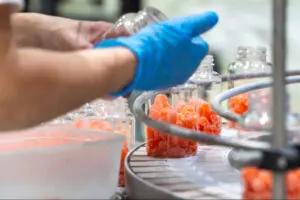
Non-starch gummy manufacturing is especially attractive in segments where hygiene, traceability and brand image matter most, including:
- Vitamin and mineral gummies for adults and children.
- Functional gummies that support sleep, stress, immunity or performance.
- CBD and other regulated active ingredients in markets where controls are strict.
- Vegan, organic and premium wellness gummies.
Traditional starch mogul systems are still widely used for classic confectionery gummies where very specific traditional textures are required or where a very wide range of shapes is needed.
Many larger producers now operate both technologies. They use non-starch gummy manufacturing equipment for fortified and high value products and keep starch mogul lines for conventional candy gummies. This mixed strategy allows them to meet different customer and regulatory expectations within the same organization.
How Non-Starch Gummy Manufacturing Equipment Works
Although different suppliers use different designs, most non-starch lines share a similar structure:
- Kitchen and cooking section
Syrup and gelling agents are dissolved and cooked to a defined dry solids content. Efficient heat exchangers and controlled vacuum systems often help reach target solids while protecting flavor and color. - Inline blending and active addition
After cooking, the mass is tempered. Inline dosing systems add flavors, colors, acids and active ingredients at controlled rates. This protects sensitive ingredients and supports accurate dosing. - Depositing into reusable molds
The mass is deposited into molds using piston or servo driven heads. The depositor controls shot weight, temperature and depositing speed. Recipes can be saved and recalled from the control system to reduce human error. - Cooling tunnels
Molds move through cooling tunnels where air temperature, humidity and speed are managed. This stage defines much of the final texture and surface quality. - Demolding, finishing and packing
Gummies are demolded, lightly coated if required and transferred to inspection and final packing. Count or weight based packing systems are common for supplement products.
The key difference from starch based processes is that all product contact surfaces are non porous and washable. There is no shared starch medium that needs to be dried, screened and recycled between batches.
Comparing Starch and Non-Starch Gummy Processes
When you compare starch and non-starch processes, it helps to look at a few practical areas.
Hygiene and cleaning
- Starch based: Reused starch and open tray handling add complexity for housekeeping and validation. Extra care is needed to control dust and residues.
- Non-starch: Solid surfaces and enclosed systems make cleaning and verification easier and support supplement level expectations.
Speed and footprint
- Starch based: Longer drying times and large tray rooms increase footprint and handling.
- Non-starch: Shorter setting times and a more compact line layout often reduce handling and can improve responsiveness.
Formulation and brand position
- Starch based: Very flexible for classic candy gummies and certain textures that rely on long, slow curing.
- Non-starch: Well suited for pectin based gummies, vegan product lines and functional gummies where hygiene and consistent potency are priorities.
Investment and complexity
- Starch based: Requires investment in mogul systems, starch conditioning, drying rooms and dust control.
- Non-starch: Investment focuses on kitchen, depositor, molds and cooling tunnels, without separate starch handling systems. Total cost depends on capacity and automation level.
For many health conscious brands and supplement manufacturers, non-starch gummy manufacturing equipment now offers a better balance between control, hygiene and flexibility.
How Sinofude Supports Non-Starch Gummy Manufacturing
Sinofude focuses on gummy manufacturing equipment and non-starch gummy production lines that serve both confectionery and supplement markets. Our starchless lines are designed for candy gummies and for vitamin, CBD and functional gummies where hygiene and process control are especially important.
Key ways we support non-starch projects include:
- Configuring lines that integrate high solids cooking, inline dosing, starchless depositing, cooling and demolding.
- Providing mold design options so you can match brand specific shapes and sizes.
- Supporting plant layout planning so non-starch lines fit your space, utilities and product flow.
- Offering commissioning and training so your team understands how to run, clean and maintain the line.
Our goal is to help you compare starch and non-starch options based on your products and markets, then select non-starch gummy manufacturing equipment that matches your hygiene, label and performance targets.
Compare non-starch and starch based processes for your next project. If you are exploring non-starch gummy lines for health conscious or supplement focused products, you can connect with the Sinofude team through our website to discuss your recipes, capacity goals and regulatory needs.