
SUMMARY
Gummy bear candy requires more precise production control than basic gummy shapes because small mold details make defects easier to see. In this blog, we explain how mold fill consistency, depositor control, cooling dwell time, and de-molding timing affect shape quality. We also cover how production teams can reduce defects and improve repeatability when manufacturing gummy bears at scale.
Gummy Bear Candy Manufacturing: What Changes With Shaped Gummies
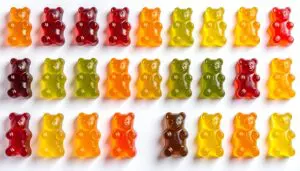
Gummy bear candy is one of the most familiar gummy formats, but it is also less forgiving than simpler shapes. Small details like ears, arms, legs, and facial features make production defects easier to spot. A gummy cube or drop may hide minor fill variation, but a gummy bear often will not.
For production managers, technical leads, and operations teams, this means the process needs tighter control. The formula still matters, but gummy bear quality depends heavily on mold filling, deposit accuracy, cooling time, and clean de-molding.
SINOFUDE designs gummy production equipment to support the main stages of commercial gummy manufacturing, including cooking, depositing, molding, cooling, de-molding, and final output. A well-matched line helps manufacturers improve shape quality and reduce variation from batch to batch.
GUMMY CANDY PRODUCTION PROCESS FOR MANUFACTURERS
Why shaped gummies need tighter control
Shaped gummies like gummy bears require more precision because the mold has more detail. If the gummy mass does not flow correctly, small mold features may not fill completely. If the deposit is inconsistent, finished pieces may vary in weight or shape. If cooling or de-molding is rushed, the gummy may stretch, tear, or lose definition.
The key production variables include:
- Gummy mass temperature
- Viscosity
- Deposit weight
- Nozzle alignment
- Mold fill quality
- Cooling dwell time
- Product temperature before de-molding
- Mold release timing
Each variable affects the next. For example, poor temperature control can change viscosity. Viscosity affects mold filling. Mold filling affects cooling. Cooling affects de-molding. That is why shaped gummy production should be managed as one connected process.
Mold fill consistency affects shape definition
A gummy bear mold needs to fill completely and cleanly. If the gummy mass is too thick, it may not reach small details before it begins to set. If it is too thin, it may overflow or create weak edges.
Common mold fill issues include:
- Underfilled ears, arms, or legs
- Air bubbles
- Overflow
- Uneven edges
- Inconsistent piece size
- Poor detail definition
Production teams should inspect fill quality early in the run and across multiple mold cavities. Waiting until packaging to identify shape issues can lead to unnecessary waste and rework.
Depositor control affects weight and appearance
The depositor controls how much gummy mass enters each cavity. For gummy bear candy, this directly affects finished piece weight, appearance, and consistency.
Operators should monitor deposit weight, temperature, nozzle cut-off, hopper conditions, and mold alignment. Small inconsistencies can create visible defects, especially in detailed shapes.
A controlled depositing system helps reduce:
- Weight variation
- Tails or strings
- Incomplete shapes
- Overflow
- Surface defects
- Uneven cooling behavior
For manufacturers running multiple gummy shapes, depositor flexibility also matters. The line should be able to handle mold changes without losing accuracy or repeatability.
Cooling dwell time protects the final shape
Cooling dwell time is the amount of time gummies spend cooling before de-molding. For gummy bear candy, this step is critical. The gummy needs enough structure to release from the mold without stretching or deforming.
If cooling time is too short, the bear may stick, tear, or lose detail. If cooling is uneven, some pieces may release cleanly while others remain too soft. If cooling is too long, production speed may suffer and the texture may become firmer than intended.
Cooling should be matched to:
- Formula type
- Gelling system
- Piece size
- Mold depth
- Cooling temperature
- Airflow
- Humidity
- Desired chew
The goal is not simply to cool the product. The goal is to create enough structure for clean release while preserving the intended texture.
De-molding timing can prevent defects
De-molding is often where shape problems become visible. A gummy bear may look properly filled in the mold, but if it is released too early or too aggressively, it can stretch, tear, or flatten.
Common de-molding defects include:
- Torn ears or limbs
- Stretched bodies
- Flattened details
- Pieces stuck in the mold
- Surface marks
- Misshapen gummies
The best de-molding timing depends on product temperature, mold release behavior, texture, and line speed. Production teams should track release quality during the run, not only at startup.
Clean de-molding helps protect the finished shape and makes coating, inspection, and packaging easier.
(Placeholder) SOUR GUMMY CANDY AT SCALE: CONTROLLING TEXTURE AND SOUR DELIVERY
Checkpoints for better gummy bear quality
Gummy bear candy production improves when teams monitor the right checkpoints throughout the process. These checks help catch problems before they create a full batch of defects.
Useful checkpoints include:
- Confirm gummy mass temperature before depositing
- Check deposit weight across cavities
- Inspect mold fill quality after depositing
- Confirm nozzle alignment and cut-off
- Monitor cooling dwell time
- Check product temperature before de-molding
- Inspect release quality after de-molding
- Review shape, surface, and texture after holding
- Watch for sticking or deformation before packaging
These checkpoints help production teams tighten the controls that matter most for gummy bears.
Equipment choices matter for shaped gummies
Gummy bear candy requires equipment that can control small details consistently. Production teams should look for accurate depositing, stable temperature control, mold compatibility, sufficient cooling capacity, and reliable de-molding.
Equipment should also be easy for operators to monitor, clean, and adjust. The United State’s Food and Drug Administration (FDA) Current Good Manufacturing Practice guidance for food addresses production and process controls, equipment maintenance, sanitary operations, and related systems that support safe food manufacturing. For gummy producers, the right line should support both output and repeatability. A faster line only creates value if it can maintain consistent shape quality.
Improve gummy bear shape quality
Gummy bear candy manufacturing depends on precise control over mold filling, depositing, cooling, and demolding. When these steps are aligned, manufacturers can reduce defects, improve shape definition, and produce more consistent gummies at scale.
Our team helps manufacturers understand how equipment choices affect shaped gummy production. Improve shape quality by tightening the controls that matter most for gummy bears.