
SUMMARY
Sour gummy candy production requires careful process control because acid timing, coating, cooling, and moisture all affect the final texture and sour finish. In this blog, we explain why sour gummy candy can be harder to scale than standard gummies, what causes common issues like sticking and sweating, and which production checkpoints help improve repeatability. We also show how the right equipment choices can help gummy producers, quality managers, and process engineers stabilize texture, finish, and sour delivery.
Sour Gummy Candy at Scale: Controlling Texture and Sour Delivery
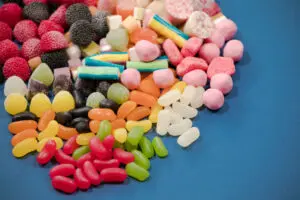
Sour gummy candy depends on balance. The outside needs to deliver a bright sour hit, while the inside needs to stay chewy, flavorful, and consistent. For manufacturers, achieving that balance across long production runs takes more than a good recipe. It requires control over acid timing, temperature, depositing, cooling, coating, and storage conditions.
Sour gummy production also introduces challenges that standard gummies may not have. Acids can affect flavor, pH, texture, and the way the product surface behaves after cooling and coating. The United States Food and Drug Administration (FDA), identifies pH control agents and acidulants, such as citric acid, as ingredients used to control acidity, while stabilizers and thickeners such as gelatin and pectin help support uniform texture and mouthfeel in food products.
For gummy producers, quality managers, and process engineers, the goal is to make every batch behave the same way from cooking through packaging. SINOFUDE’s gummy production lines support key stages such as cooking, depositing, molding, cooling, demolding, and final product output, helping manufacturers build a more repeatable process at commercial scale.
WHAT GUMMY CANDIES ARE MADE OF AND HOW EQUIPMENT CONTROLS CONSISTENCY
Why sour gummy candy can be harder to control
Sour gummy candy is more than a regular gummy with sour powder added at the end. The sour profile may come from acids in the gummy base, acids in the coating, or a combination of both. Each choice affects the process differently.
When acid is added to the gummy mass, production teams need to control timing, temperature, mixing, and holding conditions. If acid is added too early or mixed unevenly, the gummy may set differently or develop inconsistent flavor. If acid is mainly applied as an external coating, teams need to manage the gummy surface carefully so the coating adheres evenly without creating stickiness or sweating.
Common acids used in sour confectionery include citric acid and malic acid. The FDA lists citric acid as a food substance used for functions including flavor enhancement and pH control. These ingredients are useful, but they also make process consistency more important because sourness, moisture, and texture are closely connected.
Start with the sour target
Before production teams adjust equipment or coating conditions, they should define the intended sour experience. A mild sour gummy needs a different process than a product designed for an intense first-bite sour burst.
A clear sour target should answer:
- Will sourness come from the gummy base, the coating, or both?
- Which acid or acid blend will be used?
- How strong should the first sour hit be?
- How long should the sourness last while chewing?
- Should the finish be sugar-sanded, sour-coated, oil-polished, or uncoated?
- What texture should the gummy have after packaging and storage?
These decisions help the production team avoid solving one problem while creating another. For example, adding more acid to the coating may increase sour impact, but it may also increase the risk of moisture pickup, clumping, or sticky surfaces if coating and packaging conditions are not controlled.
1. Control acid timing
Acid timing is one of the most important checkpoints in sour gummy candy production. The point where acid is added can affect flavor, texture, pH, viscosity, and setting behavior.
For many gummy processes, color, flavor, and acid are added after cooking. This helps protect the main cooking step while allowing the final taste and appearance to be adjusted before depositing. SINOFUDE gummy equipment can support automatic dosing for colors, flavors, and acids, helping reduce variation from manual additions and giving operators more control over repeatability.
Production teams should monitor:
- Acid addition point
- Acid dose accuracy
- Mixing time after acid addition
- Gummy mass temperature during dosing
- Holding time before depositing
- pH or product-specific quality targets
When these conditions are controlled, the gummy mass is more likely to deposit consistently and deliver the intended sour profile.
2. Keep temperature stable from cooking to depositing
Temperature changes can quickly affect a sour gummy line. If the gummy mass cools too much before depositing, it may thicken and create strings, tails, bubbles, or incomplete shapes. If it stays too hot for too long, the texture, flavor, or setting behavior may drift.
Temperature should be monitored across the full production path, including:
- Cooking
- Holding
- Transfer lines
- Mixing
- Depositor hopper
- Mold filling
- Cooling
This full-path view matters because a problem may not show up where it starts. A small temperature shift in the holding tank may later appear as deposit weight variation, rough shape definition, or uneven coating pickup.
Stable temperature control helps each deposit behave more like the last one, which supports better weight control, cleaner shapes, and more consistent texture.
3. Match depositing conditions to the formula
Depositing is where consistency becomes visible. The gummy mass needs to enter each mold cavity at the right temperature, flow rate, and portion size. If depositing is unstable, the finished product may vary in weight, shape, surface quality, and cooling behavior.
In sour gummy candy production, depositing consistency matters even more because coating performance depends on the shape and surface of the gummy. Pieces with inconsistent weights or shapes may cool differently, release differently, and pick up coating unevenly.
Quality teams should watch for:
- Underfilled molds
- Overflow
- Air bubbles
- Tails or strings
- Weight variation
- Uneven shape definition
- Inconsistent coating pickup after de-molding
A controlled depositor helps reduce these issues by placing a repeatable amount of gummy mass into each mold cavity. For producers running multiple shapes or formulas, mold compatibility and deposit accuracy should be reviewed before scaling production.
GUMMY CANDY PRODUCTION PROCESS FOR MANUFACTURERS
4. Give cooling enough time to set the structure
Cooling is not just a waiting step. It is where the gummy structure stabilizes enough for de-molding, coating, and packaging. If cooling is too short or uneven, the product may stretch, deform, stick to molds, or feel different from one section of the batch to another.
For sour gummy candy, cooling also affects the surface that receives the sour finish. A gummy that is too warm or too moist may pick up coating unevenly, clump in the coating drum, or sweat after packaging.
Production teams should monitor:
- Cooling time
- Cooling temperature
- Airflow
- Room humidity
- Mold condition
- Product temperature before de-molding
- Product temperature before coating
The goal is to create a gummy that is firm enough to handle cleanly while still meeting the desired chew profile.
5. Manage sticking before coating
Sticking often starts before the sour coating is applied. If gummies have too much surface moisture or are demolded too early, they may cling to molds, conveyors, transfer points, or each other. Once that happens, the coating process becomes harder to control.
Common causes of sticking include:
- Excess moisture in the gummy
- Short cooling time
- High room humidity
- Warm product temperature
- Incomplete setting
- Poor de-molding conditions
- Formula imbalance
- Delays between de-molding and finishing
A coating system cannot fully correct a gummy that is not properly cooked, cooled, or de-molded. The best results come when the cooking, cooling, de-molding, and finishing stages are aligned as one process.
6. Control sour coating application
For many sour gummies, the coating is what defines the product. A sour coating may include sugar, acid, flavor, color, or a dry blend designed for a specific taste and texture. If the coating is not applied evenly, some pieces may taste too sour while others taste flat.
Production teams should control:
- Coating blend ratio
- Sugar-to-acid balance
- Acid particle size
- Product temperature before coating
- Surface moisture before coating
- Coating drum speed
- Coating time
- Coating pickup weight
- Removal of excess coating
The goal is even coverage without overloading the surface. Too much coating can create dusting, clumping, harsh sourness, or moisture issues. Too little coating can reduce sour impact and lead to inconsistent customer experience.
7. Watch for sweating after cooling and coating
Sweating happens when moisture appears on the gummy surface after production. In sour gummy candy, sweating can dissolve the coating, create sticky clumps, change the appearance, and affect how the product feels when eaten.
Moisture is a major factor in confectionery quality and shelf life. Research on sugar confections explains that water content, water activity, and glass transition influence texture, moisture migration, packaging needs, and storage stability.
Sweating may be caused by:
- High residual moisture
- Incomplete drying or setting
- Humidity exposure
- Moisture-sensitive coating ingredients
- Warm product entering packaging
- Weak packaging barrier
- Temperature changes during storage or shipping
Quality teams should check the product after cooling, after coating, after packaging, and after storage simulation when possible. This helps determine whether sweating is caused by the formula, process, coating, packaging, or storage environment.
8. Confirm texture after storage
A sour gummy can feel correct at de-molding but change after coating, packaging, or storage. The surface may become tacky, the center may soften, or the coating may absorb moisture. That is why texture should be evaluated beyond the production line.
Teams should compare product quality at several points:
- After cooling
- After de-molding
- After coating
- After packaging
- After 24 hours
- After storage or stability testing
This gives quality managers a more accurate view of the product customers will receive. The finished gummy needs to be stable not only when it leaves the line, but also after it moves through storage, shipping, and retail handling.
How equipment choices support repeatability
Repeatable sour gummy production depends on controlling each stage from syrup cooking to final output. Equipment should support stable temperature control, accurate dosing, clean depositing, reliable cooling, controlled de-molding, and consistent finishing.
When evaluating sour gummy candy equipment, manufacturers should consider whether the line can:
- Maintain stable cooking and holding conditions
- Dose acids, colors, and flavors accurately
- Deposit consistent piece weights and shapes
- Provide enough cooling capacity for the product size and output rate
- Demold gummies without damaging the surface
- Support consistent coating and finishing
- Allow operators to monitor and adjust process conditions
- Support documentation and quality checks
Process control also supports broader food manufacturing discipline. The FDA notes that Current Good Manufacturing Practices for food address areas such as plant and equipment maintenance, sanitary operations, facility sanitation, and production and process controls. FDA HACCP guidance also emphasizes preventive control through hazard analysis, monitoring procedures, corrective actions, verification, and recordkeeping.
For production teams, these principles reinforce the same idea: consistent outcomes depend on controlled processes, clear monitoring, and reliable records.
Stabilize sour gummy candy texture and finish
Sour gummy candy production is about controlling the full process, not just the final coating step. Acid timing, temperature control, depositing, cooling, demolding, coating, packaging, and storage conditions all work together to shape the finished product.
At SINOFUDE, we help manufacturers understand how equipment choices affect sour gummy candy texture, finish, and repeatability. With the right line design and process checkpoints, producers can reduce sticking, sweating, coating variation, and texture drift.
Use these checkpoints to stabilize sour gummy candy texture and finish before scaling your next product.