
SUMMARY
At SINOFUDE, we help supplement brands turn gummy concepts into scalable, consistent products. In this guide, we explain how vitamins are manufactured in gummy supplements, from formulation and mixing through depositing, drying, and packaging. The goal is to help you understand what it takes to make compliant, shelf-stable gummies so you can plan production with fewer surprises.
How Are Vitamins Manufactured? A Step-by-Step Look at Gummy Supplements
Gummy vitamins may look simple, but manufacturing them requires tight control over temperature, mixing, moisture, and dosing accuracy. Unlike tablets or capsules, gummies are a confection-style delivery system. That means you must balance taste and texture while protecting active ingredients and meeting regulatory expectations.
At SINOFUDE, we work with manufacturers and growing brands that need repeatable results at scale. When a gummy line is designed correctly, you get more consistent piece weights, improved shelf stability, and smoother production planning. Below is a step-by-step look at how gummy vitamins are made and what equipment is typically used along the way.
Step 1: Formulation and regulatory planning
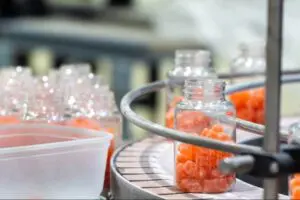
Production starts with formulation. This is where you decide the active ingredients, dosage per serving, serving size, and the gummy base. You also decide whether your gummy uses gelatin or pectin, what sweeteners you will use, and which flavors, acids, and colors best fit the brand.
This is also the right time to plan compliance. In the United States, the Food and Drug Administration (FDA) regulates dietary supplements under specific requirements, including Current Good Manufacturing Practice (CGMP) requirements for dietary supplements. These expectations influence how you document formulas, control quality, and manage traceability. Your label strategy also starts here because your target dosage and serving size drive the Supplement Facts panel and related claims.
If you are trying to build a shelf-stable gummy, formulation must also account for moisture behavior. Some ingredients attract water. Others can affect texture and stability over time. A stable formula and a stable process need to work together.
GUMMY FORMULATION BASICS FOR SCALING BRANDS
Step 2: Incoming materials, specifications, and quality setup
Once you have a formula, you need consistency in what you receive. That means setting specifications for key ingredients such as gelatin or pectin, sweeteners, acids, flavors, and active premixes. You also need traceability, which includes recording lot numbers and maintaining clear records from receiving through finished products.
Many quality problems begin here. If gelatin strength varies, your chew can vary. If a syrup has a different solids level, your texture and drying time can change. When brands scale, they typically formalize this step with a Quality Control (QC) program. Quality Control means routine checks and documentation that confirm ingredients and finished gummies meet defined standards.
Step 3: Weighing, premixing, and building the gummy base
Gummy production depends on accurate weighing and controlled mixing. Many facilities use a staged approach so gelling agents hydrate correctly and solids dissolve consistently. Premixing also helps you control sequence. Sequence matters because adding acids, flavors, colors, or actives too early can reduce uniformity or cause foaming.
From an equipment standpoint, this stage often includes dosing systems, mixing tanks, and controlled agitation that can be repeated from batch to batch. As volume increases, brands frequently move toward automated control to reduce variation. A common term you may hear is a Programmable Logic Controller (PLC). A Programmable Logic Controller is an automation control system that helps keep temperatures, mixing times, and transfers consistent.
Step 4: Cooking and concentration
Cooking is where the gummy base reaches the right concentration and dissolves fully. Time and temperature control are critical. Overheating can cause flavor loss or unwanted color changes. Underheating can cause incomplete dissolution and inconsistent texture.
This step is also closely tied to shelf stability because moisture level and solids content influence how the gummy behaves over time. A controlled cooking process helps you create a base that deposits cleanly and cures predictably.
Step 5: Cooling and adding active ingredients
Many vitamin and botanical ingredients are sensitive to heat. That is why manufacturers often cool the cooked base to a controlled temperature window before adding actives. The goal is to protect potency while still achieving uniform distribution.
Uniformity matters because gummy vitamins must deliver a consistent dose per piece and per serving. Proper mixing at this stage helps reduce variability across a batch. It also supports smoother downstream depositing because the mixture remains stable and well blended.
Step 6: Depositing into molds
Depositing is the step where the liquid gummy mass is portioned into molds to form the final shape. Depositing accuracy is one of the most important drivers of consistency. If the deposit weight drifts, the dose can drift. If the deposit timing and flow are inconsistent, shapes can vary and defects increase.
Depending on your manufacturing method, you may use starch-based molding or a non-starch depositing process. Both can work well when engineered and controlled properly. The best approach depends on product design, capacity targets, hygiene preferences, and facility layout.
From our perspective, depositing is one of the key places where equipment selection directly affects business outcomes. High repeatability here helps protect yield, reduce rework, and support predictable output.
STARCH VS NON-STARCH GUMMY PRODUCTION EXPLAINED
Step 7: Setting, curing, and drying
After depositing, gummies need time to set and reach a stable texture. This stage is often called curing or drying, depending on the process and equipment used. The goal is to reach the correct final moisture balance so the gummies hold their shape, resist sticking, and maintain texture over shelf life.
This step is where many shelf-life issues start if conditions are not controlled. If gummies retain too much moisture, they can become sticky and deform. If they dry unevenly, texture and appearance can vary across a batch. Facilities often manage this with controlled cooling, drying tunnels, or conditioned rooms designed to reach repeatable endpoints.
Step 8: Finishing
After curing, gummies may go through finishing steps based on the product design. Some gummies are lightly oiled to reduce sticking. Others are sugar sanded for a specific look and mouthfeel. Some products use specialty coatings for functional or branding reasons.
Finishing should be consistent and measured. Too much oil or coating can affect label claims, appearance, and consumer experience. Too little can increase sticking and packaging issues.
Step 9: Packaging and labeling
Packaging is part of manufacturing because it protects the product. Gummy vitamins are sensitive to humidity and temperature swings. If packaging does not provide enough barrier protection, gummies can absorb moisture and become sticky, or they can dry out and become tough.
This is why packaging decisions should match your stability goals. Bottles, pouches, and blisters each have different barrier characteristics and operational requirements. Packaging also must support correct labeling. In the United States, dietary supplement labels typically require a Supplement Facts panel, accurate ingredient declarations, and required statements.
PACKAGING CHOICES THAT IMPROVE GUMMY SHELF STABILITY
Step 10: Quality Control testing, documentation, and batch release
Before a batch is released, manufacturers typically complete Quality Control checks and verify records. These checks can include piece weight verification, visual inspection, moisture targets, and packaging seal checks. This step also includes confirming that labels match the product and that lot coding supports traceability.
As brands grow, documentation becomes just as important as equipment. It supports consistency, reduces risk, and helps maintain compliance expectations tied to Current Good Manufacturing Practice.
What this means for supplement brands and wellness entrepreneurs
If you are researching how vitamins are manufactured because you want to launch or scale gummy supplements, focus on two realities. First, a stable gummy requires controlled moisture, repeatable depositing, and the right packaging. Second, compliance and documentation should be built into the process, not added at the end.
Use this guide to understand what it takes to produce compliant, shelf-stable gummies at scale. When you are ready to plan production, use these steps to evaluate your process flow, equipment requirements, and quality control program.