
SUMMARY
Scaling up to professional candy making equipment is not just about buying bigger machines. It is about turning a growing candy operation into a repeatable, predictable manufacturing system that can support you through 2026 and beyond. When you move from small pans and semi manual tools to professional lines, you also change how you plan capacity, train people, manage quality, and work with suppliers.
At Sinofude, we work with candy businesses that are at this exact turning point. Some are artisan brands that now supply regional retailers. Others are contract manufacturers who need to move from “project by project” production to stable, scheduled runs. All of them are asking similar questions:
- How much capacity do we really need for the next three years?
- What will this do to our utilities, staffing, and floor layout?
- How do we avoid overbuying or ending up with equipment that is hard to use?
In this blog, we share how professional candy making equipment fits into a real production line, what changes when you scale, what equipment is typically involved, and how to plan upgrades in a way that is responsible and data driven, not just reactive to short term demand spikes.
Where Professional Candy Making Equipment Fits in Your Line
A modern candy plant can be viewed as five connected zones:
- Ingredient preparation
- Cooking and dissolving
- Forming or depositing
- Cooling and finishing
- Packaging and secondary operations
In small batch setups, these zones often overlap. One person may cook, hand pour, cut, and pack. Professional candy making equipment separates and stabilizes each zone. For example:
- Dedicated cookers handle syrup or mass preparation at controlled temperatures and solids levels.
- Depositors or forming machines create consistent shapes and weights at scale.
- Cooling tunnels and finishing systems give products the right structure and surface.
- Packaging lines weigh, count, or flow wrap product and prepare it for shipping.
Sinofude’s product range is built around this full path. The company manufactures high quality production lines for chocolate, confectionery, and bakery items, and more than 80 percent of its equipment is exported to over 60 countries.
When we talk about scaling up, we are not only talking about one new machine. We are talking about how each of these zones will change once you introduce professional grade systems.
Why Scaling Up with Professional Equipment Is Different
Moving from small batch to professional candy making equipment changes three things in particular:
1. Risk Management
Small batch questions sound like:
- “How many trays can we finish today?”
Professional equipment questions sound like:
- “How many kilograms per hour does this line run at our recipe’s solids level?”
- “What is our realistic output per shift when we include sanitation, changeovers, and planned stops?”
Industry guides often describe small automatic candy lines with capacities in the 30 to 100 kilograms per hour range, while industrial systems can reach several hundred kilograms per hour or more depending on configuration.
2. How you manage risk
When you scale, a quality issue no longer affects “a few pans.” It can affect hundreds of kilograms of product. professional candy making equipment gives you better control over temperature, mixing, depositing, and cooling, but it also requires more formal procedures, records, and preventive maintenance.
3. How your team works
Your team’s role changes from hands-on “crafting” each batch to monitoring and improving the process.
Operators now work with Programmable Logic Controllers (PLCs), recipe screens, and clear standard operating procedures.
You gain much more consistency, but this also means you need:
- Proper training
- Clear roles and responsibilities
- A few internal champions who really understand both the line and your products
What Professional Candy Making Equipment Includes
Instead of listing every machine, it is more helpful to think about functions. A professional line usually includes the following building blocks:
1. Cooking and dissolving systems
- Jacketed cookers or dissolving tanks that bring sugar and glucose syrup to the right concentration.
- Options for steam or electric heating, sometimes combined with vacuum to reach target solids at lower temperatures.
2. Forming and depositing
- Gummy and jelly lines that use depositors and molds.
- Hard candy lines that use rope forming and rotary forming machines to cut and compress pieces to precise shapes.
3. Cooling and finishing
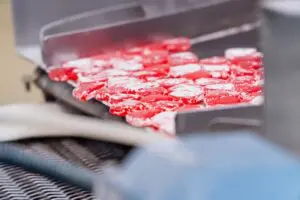
- Cooling tunnels sized for your line speed and recipe, which allow the structure to set correctly.
- Panning, sugar coating, or oiling drums when needed for surface finish.
4. Packaging and end of line
- Count or weight based filling systems.
- Flow wrappers, vertical form fill seal machines, or bottle lines.
Sinofude’s portfolio covers these functions across different product types, which allows you to build a line that emphasizes the processes that are most critical for your business, rather than buying a generic “one size fits all” system.
Key Questions to Ask Before You Invest
Instead of starting with a catalogue, it is more useful to start with questions. Here are practical questions we often walk through with customers who are considering professional candy making equipment for 2026.
1. What is the real problem you are trying to solve?
- Are you missing orders because you lack capacity?
- Are you losing yield because of scrap or inconsistent texture?
- Are you trying to enter new markets that expect higher standards?
2. How will this line fit your building?
- Do you have the ceiling height for a full cooling tunnel?
- Where will raw materials enter and finished goods exit?
- Can you separate allergen and non allergen products if needed?
We often recommend sketching your product space on paper and tracing the path of ingredients and people before you discuss equipment sizes.
3. What utilities do you have now, and what can you add?
- Steam, compressed air, chilled water, and electrical capacity are common constraints.
- Sometimes a slightly smaller line that fits your current utilities is a better first step than a larger line that requires a full utility upgrade.
4. What skills does your team already have?
- If your operators have never used PLC controlled equipment, build training time into your launch plan.
- Choose interface languages and documentation that match your workforce.
5. What does success look like two years from now?
- Do you want to run two or three shifts at a stable speed?
- Do you want flexibility for seasonal items?
- Do you want to qualify as a co manufacturer for a larger brand?
Those answers help your equipment partner recommend configurations that make sense over time, not just in year one.
Practical Steps for Growing Candy Businesses in 2026
Here is a simple, education focused roadmap you can adapt for your own planning.
Step 1: Map your current line
Create a one page map that shows:
- Each step in your process.
- Approximate cycle times.
- Where you see queues, rework, or people waiting.
This will often make it clear whether your main bottleneck is cooking, forming, cooling, or packing.
Step 2: Build a basic capacity model
For each major step, write:
“This process can handle approximately X kilograms per hour, for Y hours per day.”
You do not need perfect numbers. Even rough figures will show where your line slows down.
You can also compare that with your 2026 sales forecast to see how much of a gap you need to close.
Step 3: Decide on an upgrade style
There are three common paths:
- Incremental upgrades
- Replace or add one major machine at a time, for example a cooker or depositor.
- Modular line
- Invest in a line that can start at one capacity and be expanded later with additional modules.
- Turnkey line
- Install a full new line in one project and phase out older equipment.
Which path fits you depends on cash flow, risk tolerance, and how easily you can interrupt production.
Step 4: Look at total cost of ownership, not just price
When you evaluate offers, consider:
- Energy use per kilogram of candy.
- Expected maintenance and spare parts.
- Level of automation and its impact on staffing.
A line that is slightly more expensive up front but easier to clean, run, and maintain can save money over its life.
Step 5: Plan your learning curve
Before you sign, ask:
- How long will installation and commissioning realistically take?
- How many days of training are included?
- What support is available when operators run into questions?
This keeps your upgrade from becoming a surprise for your team.
How Sinofude Helps You Plan and Scale
Sinofude has more than 30 years of experience in candy and gummy machinery and offers complete production lines for chocolate, confectionery, and bakery products. The company introduced the ISO9001 management system in 2004, and most products have passed EU CE and UL certifications, which helps customers meet global expectations for food equipment.
Beyond supplying machines, our role is to act as a technical partner:
- We review your product mix, space, and utilities to suggest realistic line configurations.
- We support plant layout planning so the equipment fits your existing or planned facility.
- We provide commissioning and operator training so your team can run lines confidently.
The goal is not just to sell professional candy making equipment. The goal is to help you scale responsibly, with production lines that match your real needs and your 2026 plans.
Understand the key factors in scaling responsibly. If you are considering professional candy making equipment, you can contact the Sinofude team through our website to discuss your products, your capacity targets, and your upgrade path.