
SUMMARY
Small and mid-size candy factories often want more consistency, higher throughput, and easier changeovers, but they do not want to buy equipment that is too large for their space or staff. This blog explains how professional candy making equipment can help you improve quality and efficiency without oversizing. We focus on compact cookers, precise depositors, and modular line setups that let you grow step by step.
Professional Candy Making Equipment for Small Factories
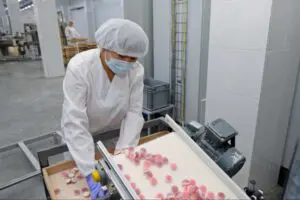
If you run a smaller candy facility, you know the pressure points. You need reliable output, consistent texture, and predictable scheduling. At the same time, every square foot matters. Utilities are limited. Staffing is lean. It is easy to assume that professional equipment is only for very large plants.
In reality, many manufacturers offer lower output cookers and depositors that are designed for short runs, product development, and smaller scale production. This gives small factories a path to professional performance without a massive footprint.
The goal is not to copy a high-volume plant. The goal is to right-size equipment so your line runs consistently, supports growth, and stays manageable for your team.
Related read: HOW TO START A CANDY BUSINESS IN 2026: A PRACTICAL ROADMAP
What right-sizing means in practice
Right-sizing is a practical decision, not a marketing term. It means matching equipment capacity to:
- Your current demand and realistic near-term growth
- Your available floor space and material flow
- Your utilities such as steam, power, water, and cooling
- Your staffing and maintenance capability
- Your product mix and changeover frequency
When equipment is oversized, small factories often deal with wasted capacity, higher operating costs, and difficult cleaning routines. When equipment is undersized, the line becomes a bottleneck and quality can suffer.
Professional candy making equipment helps most when it improves repeatability. Repeatability means you can run the same recipe and hit the same targets day after day, even when shifts change.
Compact cookers that still deliver consistent results
For many candy products, cooking is where quality is decided. If the cooker produces inconsistent solids, moisture, or temperature profiles, problems show up later as texture variation, sticking, or poor shelf stability.
A compact cooker can still be professional grade when it supports:
Stable temperature control
Better control reduces batch-to-batch variation. Your operators spend less time correcting the process and more time verifying quality.
Predictable batch flow
Small factories often run frequent product changes. You want a cooker and transfer setup that supports smooth handoff to the next step so the line does not stop and start constantly.
Practical cleaning and inspection
In a smaller facility, downtime is expensive. Hygienic equipment design supports cleaning and maintenance, which helps protect product quality and food safety.
If you make multiple products, it also helps when the cooker setup supports faster changeovers. That is part of right-sizing too. You are choosing equipment that fits how you actually run the plant.
Related read: GUMMY MANUFACTURING MACHINES: A GUIDE TO MODERN BRANDS
Deposit accurately without buying a full high-output line
Depositing is often the step where small factories feel the most pain. When deposits drift, you see inconsistent piece weights, uneven shapes, and more rework. When depositing is stable, everything downstream gets easier, including cooling, handling, and packaging.
Professional depositors are built to deliver more consistent deposits and repeatable settings. Some equipment suppliers highlight lower output and small batch depositors as a strong fit for short runs and smaller production needs.
When you are evaluating depositors for a smaller factory, focus on:
Repeatable settings
You want to save and return to known parameters. This reduces startup waste and helps new operators run the same product successfully.
Easy adjustments without constant trial and error
A depositor should make it easy to dial in deposit weight and shape. If it is difficult to tune, you will lose time and material.
Tooling and changeover speed
If you run multiple Stock Keeping Units (SKUs), changeovers matter as much as speed. A slightly slower machine that changes over quickly can outperform a faster one that takes hours to reset.
Cooling and finishing for a smaller footprint
Cooling is where candy firms up, stabilizes, and becomes easier to handle. If cooling is inconsistent, quality problems show up later. That can mean cracking, sticking, deformation, or texture variation.
Cooling also affects throughput. If cooling time is too long or unpredictable, the entire line slows down. Modular or compact cooling options can help small factories maintain control without building a huge line.
Environmental stability matters too. Hygienic design and well-controlled processing conditions support product quality and reduce contamination risk in food manufacturing.
For small facilities, the practical goal is simple. Create cooling conditions that are consistent and repeatable. Do not rely on workarounds that vary by season or shift.
Why modular lines make sense for growing brands
Modular equipment is one of the most practical ways for small and mid-size factories to scale. You can build a line that works now, then add capacity or features later. This helps you avoid buying a full high-output system before you have the demand to justify it.
A typical modular approach might include:
- A compact cooker or small batch kitchen system
- A depositor sized for your target output
- Cooling sized to match deposit speed
- Space for finishing and packaging integration
Some confectionery equipment providers describe modular or lower output systems as a good match for short runs and smaller scale production needs.
Modular is also helpful if you are adding products gradually. You might start with one core product, then expand into new shapes, sizes, or formulations once the first line is stable.
What to look for when you tour or evaluate equipment
Small factories have less margin for error. Before you commit, evaluate equipment using real production questions.
Does the equipment fit your real workflow
Walk the material flow from ingredients to packaging. Look for tight turns, blocked aisles, and awkward handoffs. If the flow is not clean, efficiency will suffer.
Can your team operate and maintain it
Professional equipment should reduce operator burden, not increase it. If it requires constant manual correction or specialized skills you do not have, it will not be a good fit.
Are cleaning and sanitation practical
Hygienic design helps equipment facilitate cleaning and maintenance. This supports food safety and consistent quality.
Ask how long it takes to clean. Ask what needs to be disassembled. Ask how you verify cleanliness. Those answers affect real productivity.
Will it support growth without forcing a rebuild
Right-sizing is not only about today. It is about building a path forward. A modular setup should give you room to expand without ripping out half the line.
How Sinofude helps right-size professional candy making equipment
At Sinofude, we work with small candy factories, emerging brands, and plant owners who want professional performance in a smaller footprint. We help you select professional candy making equipment that matches your product goals, space constraints, and production targets.
That includes planning compact cookers, depositors, and modular line layouts that support consistent output now and a clear upgrade path later.
Learn how to right-size professional candy equipment for a smaller footprint.